

There were comments reminding me that a lot of formal Public Engagement and outreach events seem performative and fake. That is because a lot of it really is just going through the motions. Over the years I have sat in some State DOT public engagement sessions that were particularly terrible.
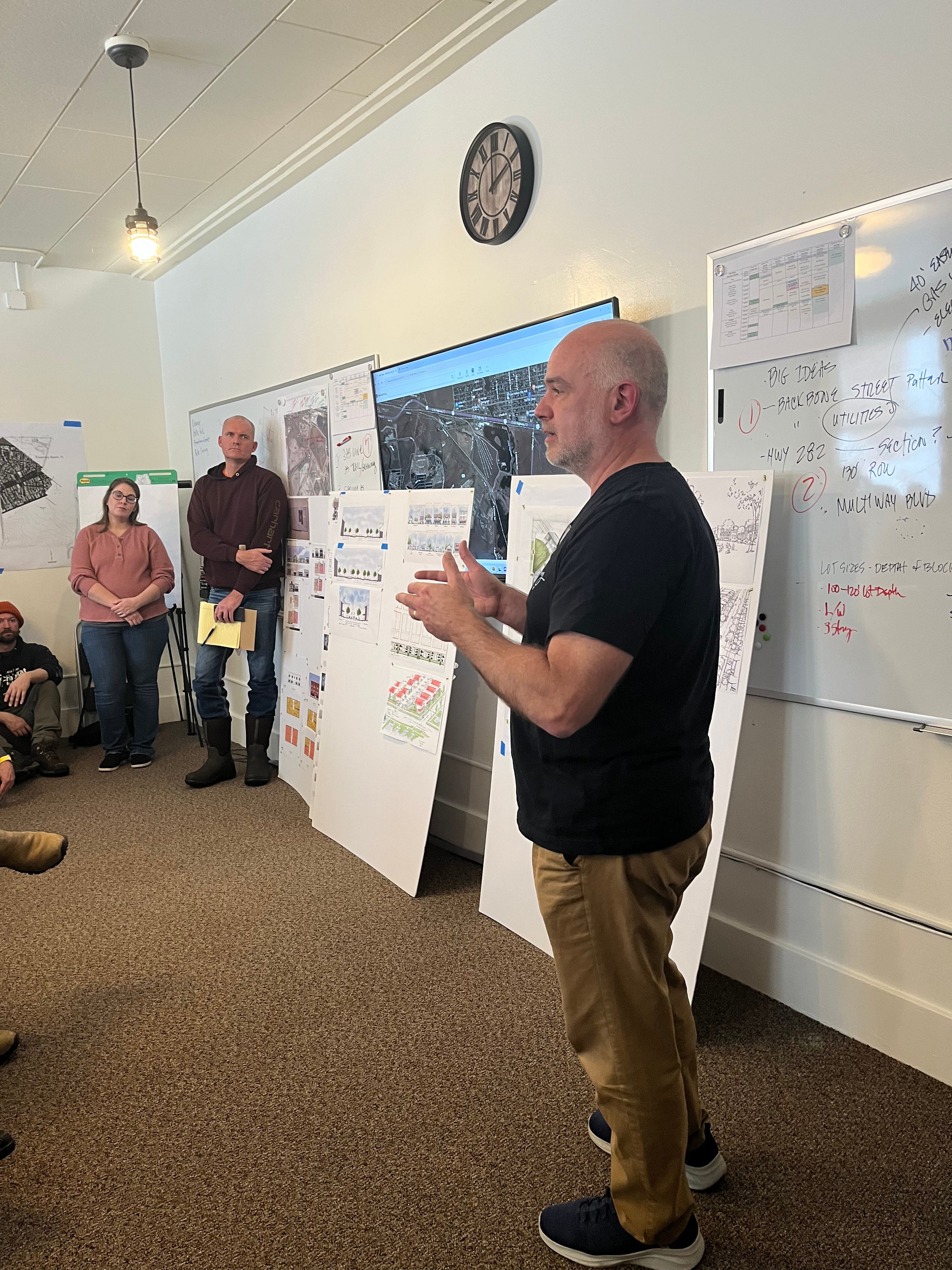
When we do planning and design charrettes for a project, people do show up convinced that we have the plan in our back pocket and we are just doing this for show. That is not an unreasonable way to look at what we are doing if you assume our process is like what they have seen before. Nobody wants to be made a fool.
That's why we have to start with a debrief of everything we know about the site and the community and ask for what's missing. We also have to explain our basic approach to placemaking and what to expect over the course of a week of focused work and responding to feedback.
Through trial and error, we have learned logistics of the physical charrette space are really important for communication. The studio space where everyone is working is dynamic and cool. Most folks have never been in that kind of environment. But it is neither fair nor reasonable to just throw a first time visitor/participant into the deep end of the pool. We have to prepare a separate room or hallway to post each evening's work to date in chronological order. The charrette team and the folks who showed up every evening know how the potential solutions to the constraints and opportunities have evolved day by day. It’s not reasonable to expect someone to show up on day 4 and just “get it”. We have to provide a transparent road map or the late arrivals can easily default to the “You had the plan in your back pocket, this is all just play acting” frame.
The timeline of drawings showing the evolution of solutions is critical for helping anyone arriving for the first time in the middle of the charrette. They are trying to figure out what is going on and absorb a lot of information. We typically draft someone from the client's team a a guide to walk people through the chronology from the start. It is best for that guide to be someone local rather than one of the team members who is in the middle of figuring out a design assignment to address the issues of the moment. They can be kinda intense. We need to meet people where they are and not expect them to run fast and jump onto a moving train. The progression of the drawings helps a person get up to speed at their own pace.
It is important to annotate and redline the drawings that are pinned up each night to capture the refinements or the need for a fresh approach for a rough part of the project. Showing that we tried something and it did not work can build trust in the overall process for the week. Members of the team areskilled, but they’re not witches.
When people understand that they really are seeing the sausage get made, that we are struggling to resolve conflicting agendas and physical issues on the ground, they open up a lot. Their body language changes. We get to know folks by name and they get to know us. That’s the time when local folks often show the team our blind spots or faulty assumptions. That’s when the sausage making works best.
At the end of the final presentation, we assign members of the team to go stand with the various large format boards for conversations with smaller groups of local folks with interests in a particular part of the plan or a particular issue like traffic, parking, tax base, etc.
If we want people to actually trust the process we are using to plan the site and address the inevitable challenges, we have to be as transparent as possible. The final presentation and the charrette report always has a bulleted list of issues that need further rigorous attention. The work we produce is usually 70% to 80% there, so it is important to capture the stuff that still needs to be addressed.
For a deep dive into how a good charrette can be planned and executed Michigan State has absorbed the foundational work of The Charrette Institute and has lots of resources: https://www.canr.msu.edu/nci/resources/#:~:text=A%20complete%20desktop%20reference%20for,and%20hold%20a%20successful%20charrette.