

This is a photo of an evening Pin Up during a design charrette for a walkable mixed use neighborhood in Montana. The client is really serious about delivering a wide range of housing across a range of price points and rents. They spoke to that goal in the opening presentation the first evening. Then the design team walked through everything we understood about the site and the community so far. Because we were all from out of town it is obvious that our understanding was very limited. We asked folks to let us know what we were missing, what weren’t we getting right, what we should be particularly careful about while designing a the neighborhood. The photo below was the team presenting on the third evening what we had worked out so far, asking for their reactions, critique, and suggestions.
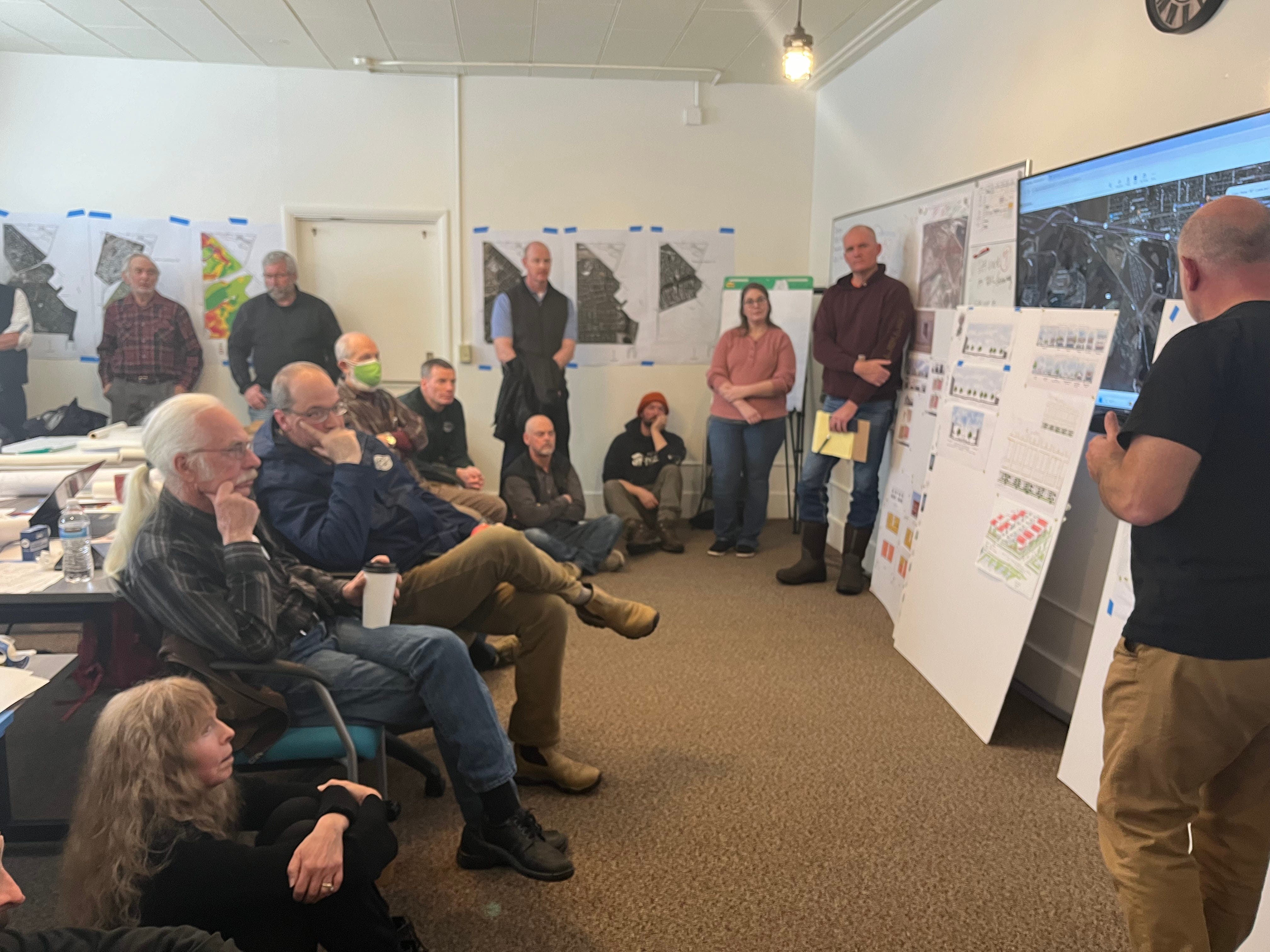
The charrette lasted 6 days. On the last day the final presentation was well received. That was 2 years ago. Since then, the project has been approved by the town as a preliminary plat and site engineering is moving forward.
I have been thinking a lot about efficiency and productivity. I see a lot of folks developing conventional sprawl projects looking for ways to be more efficient. Finding more efficient ways to build the wrong thing seriously misses the point.
You could focus on getting really good gas mileage as you drive the wrong direction. Having the right compass heading is going to be much more important. In this analogy gas mileage is a measure of efficiency and the compass heading you are following has a lot to do with how productive you are going to be achieving your goal of getting to a specific place.
Productivity is more important, more strategic than efficiency.
Ideally, we should engage in work that embodies both, with productivity as the key metric. Gathering a great team to design a neighborhood and showing your work to members of the community every evening is both productive and efficient. Opportunities for course corrections were there every evening. It is also helpful for local folks to see the design evolve as the basic idea encounters reality in a real place.
If you brought the same great team to town and they worked long hours without those public pin ups and discussions, the result would not be as good. Everyone working in the same room close to the site is efficient, but the interaction with the community made the effort productive and efficient. The combination produced work greater than the sum of its parts. (-and we got to meet some wonderful people).